
Philip and the Institutions of Respectability
Of Human BondagePhilip's conflicts with school, church, employers, and class expectations show how institutions define acceptable lives and who may belong.
increasing Bearing strength in each event
 decreasing
Bearing strength in each eventdecreasingVicarage Discipline

Vicarage Discipline
The household imposes thrift, religious observance, and careful manners on a boy who has lost his parents. Its rules make ordinary play and personal preference seem subject to adult judgment.
Order and affection
The household is not simply cruel: Louisa and Mary Ann care for Philip, though each does so within narrow habits. Their restraint becomes part of his mixed inheritance of security and loneliness.
School and Social Difference

School and Social Difference
Philip faces bullying for his club-foot in a school that also prizes class and inherited status. His ability to learn earns marks but cannot make him comfortable among boys who value games and physical confidence.
A rigid system
School authority sometimes protects him and sometimes humiliates him. Philip grows inward, observant, and suspicious of systems that claim to treat everyone alike.
Guardians Against Choice
Guardians Against Choice
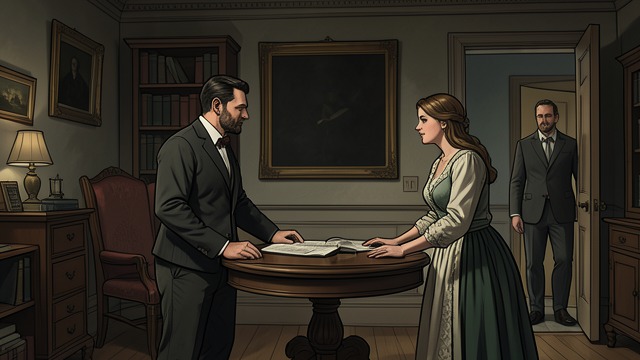
William Carey resists Philip's plans to leave school and later attempts to direct his career. Philip must argue for choices that his guardian regards as irresponsible.
Autonomy through conflict
Philip sometimes wins by persistence, but his victories are mixed with shame and dependence on family money. The struggle establishes independence as something he must negotiate rather than simply claim.
Class in the Workplace

Class in the Workplace
In offices and at Lynn and Sedley, Philip encounters employers and colleagues who use dress, accent, education, and position to mark social rank. His background grants some forms of confidence but no protection from low pay.
Respectability's limits
He learns that being called a gentleman does not prevent economic vulnerability. Work can reduce status to a uniform, a queue, or the next customer seeking directions.
Professional Gatekeeping

Professional Gatekeeping
Philip sees that hospitals, employers, and patients all judge competence through visible signs, including class and bodily appearance. His club-foot sometimes narrows opportunities even when it does not impede his work.
A negotiated place
He gradually earns trust through skill and manner rather than prestige. The final medical career is possible because he persists within institutions without believing their standards are always just.
Philip's childhood at Blackstable
Philip's years at King's School, Tercanbury
late adolescence, before Philip leaves for Germany
during Philip's accountancy and retail employment
after Philip returns to medical training
